From $50 to 50 Clinics: How a U.S. Healthcare Network Replaced the On-Site Front Desk with Virtual Video Receptionists


From $50 to 50 Clinics: How a U.S. Healthcare Network Replaced the On-Site Front Desk with Virtual Video Receptionists
A leading American orthopedic and physical therapy group started with a single fifty-dollar Virtual Front Desk station in one clinic and grew to 50 locations in three years, giving patients a live person on screen at the press of a button, solving receptionist staffing shortages, and cutting front-desk operating costs along the way.
The Challenge: 50 Front Desks, 50 Receptionists to Hire
Like most multi-location healthcare organizations, this specialty clinic network faced the same math at every site: every lobby needs a medical receptionist to greet patients, check them in, verify insurance, and collect copays. But hiring and retaining front-desk staff locally had become the hardest part of running each clinic. Turnover was constant, a single sick day left a lobby unstaffed, and a full-time salary at every location made the front desk one of the largest fixed operating costs in the business.
Self-check-in kiosks and QR-code apps were not the answer. The network serves a large share of elderly patients, and they consistently rejected anything that required scanning a QR code, downloading an app, or navigating a touchscreen form on their own. What patients actually wanted was simple: press one button and see a real person.
The Solution: A Virtual Receptionist in Every Lobby
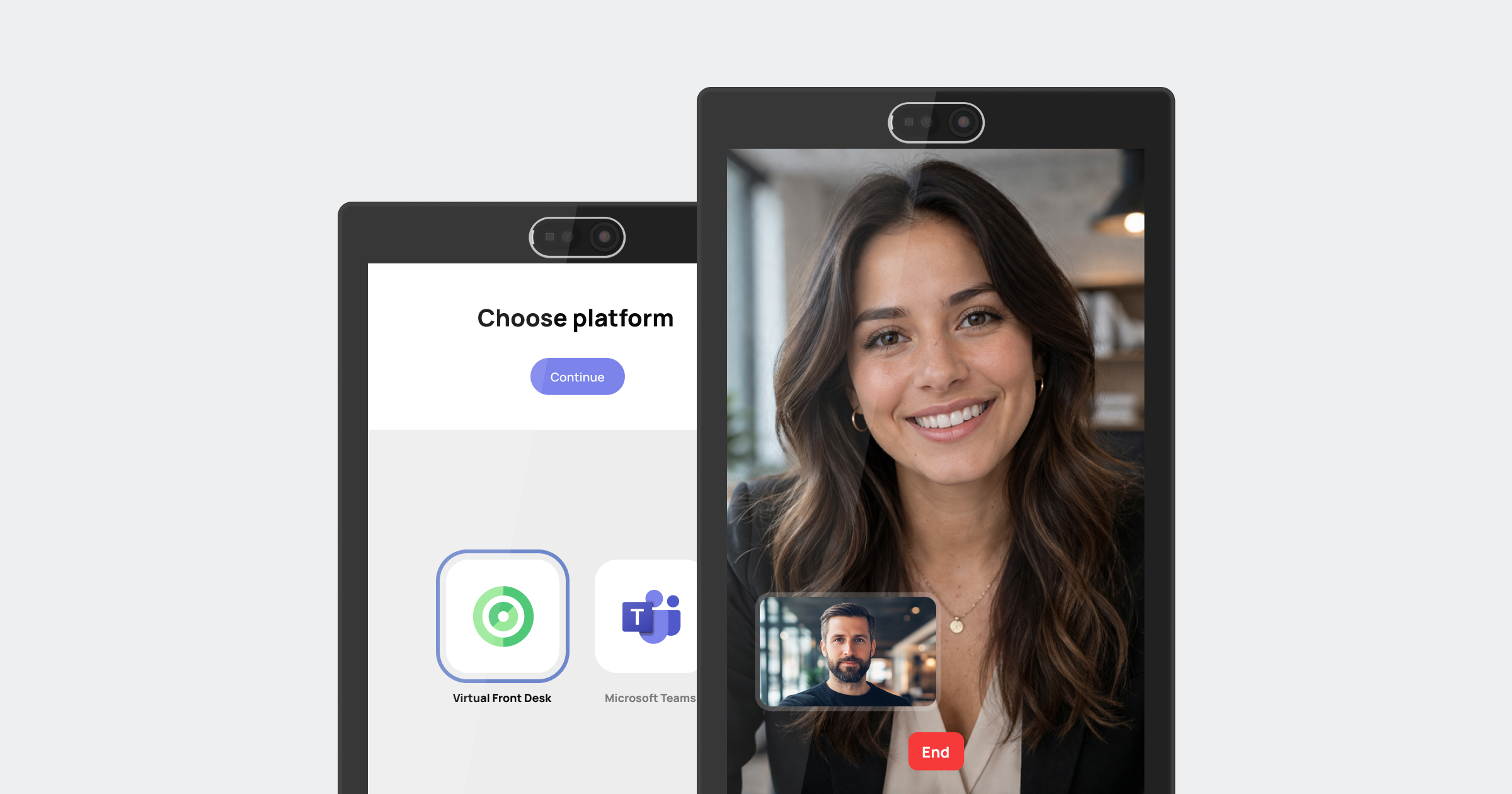
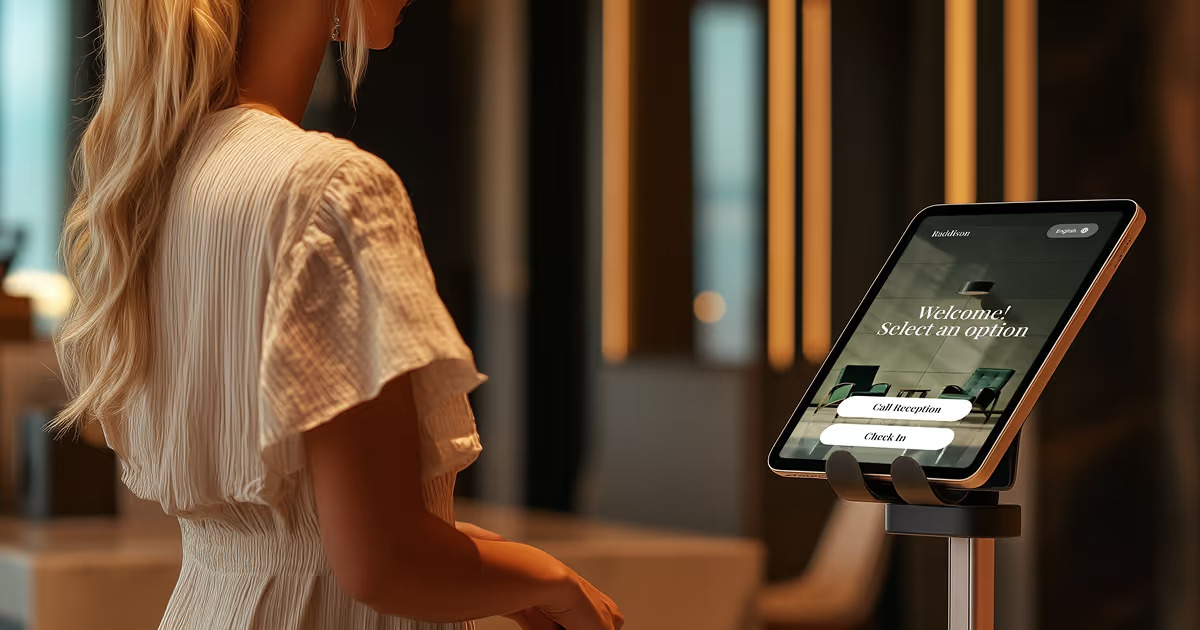
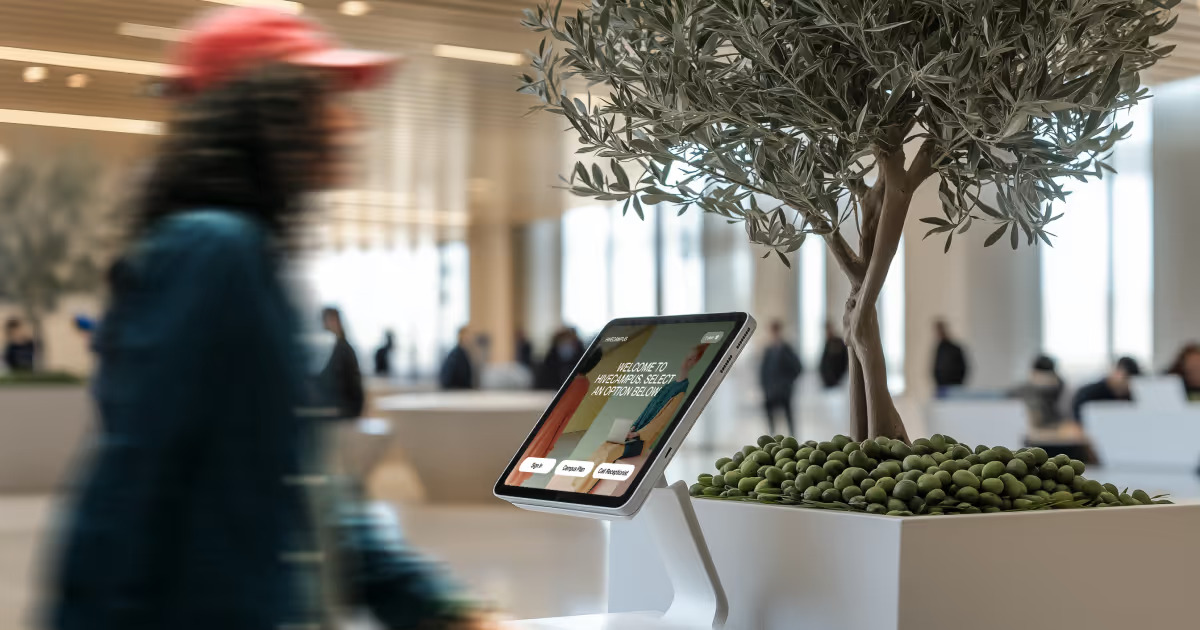
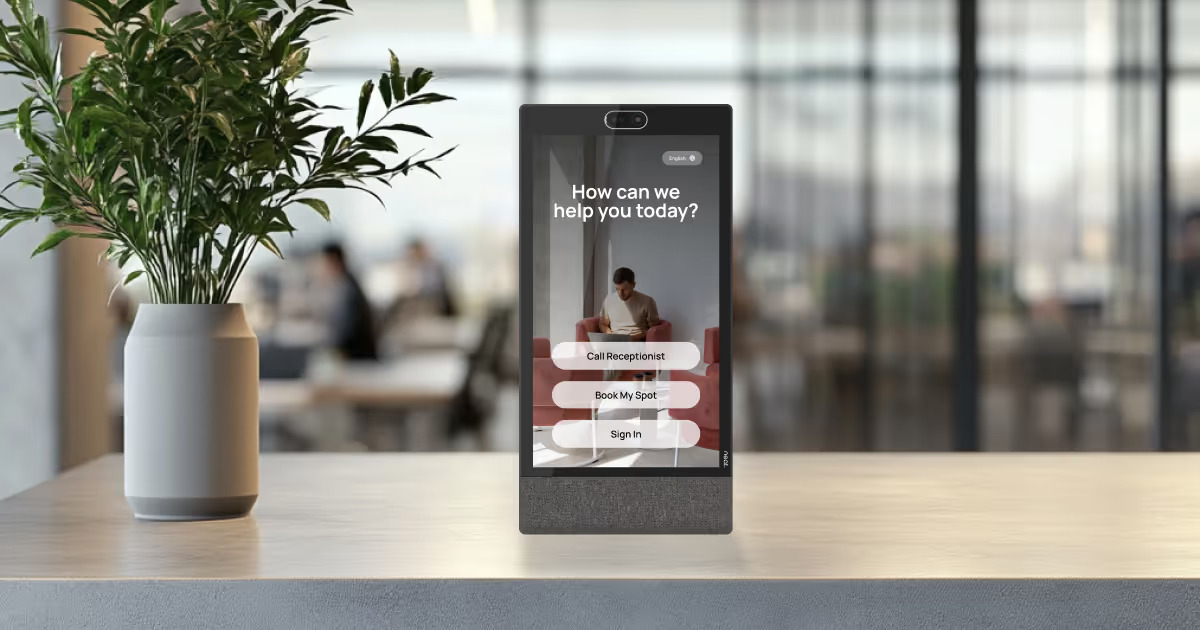
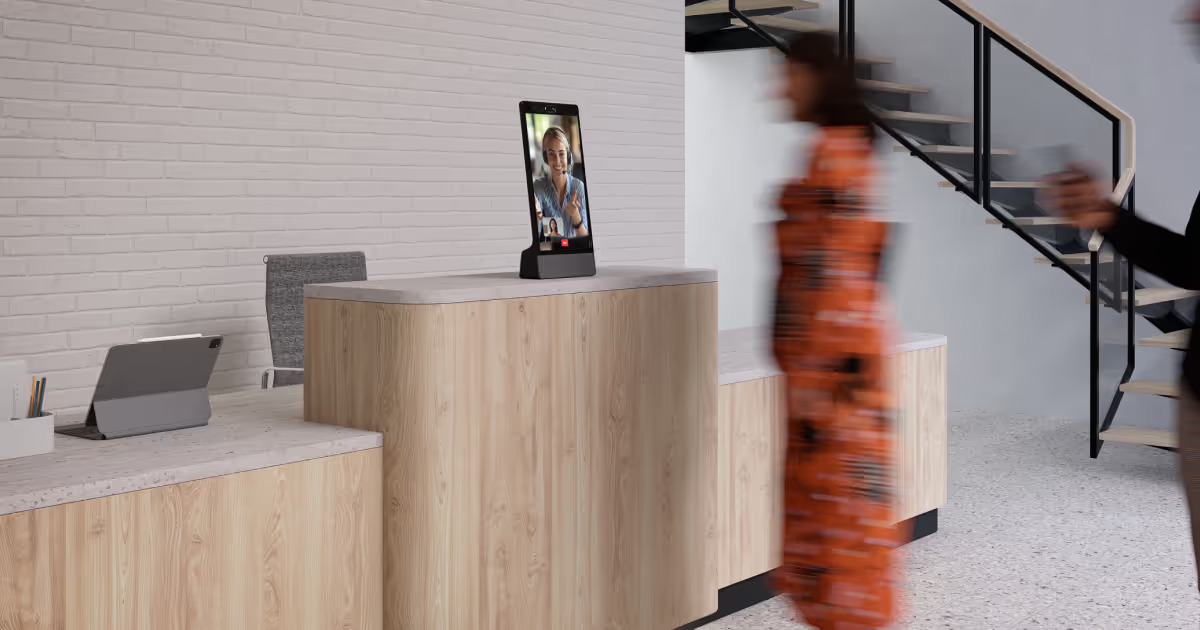
The network placed a Virtual Front Desk station in each lobby: a video reception kiosk running on a simple screen. A patient walks in, taps a single button, and a live receptionist appears on screen instantly over secure, HIPAA-compliant video. No QR codes, no app downloads, no self-service maze. For this network, it is remote reception rather than self-check-in: there is always a human face on the screen, which is exactly why elderly patients embraced it. Virtual Front Desk also offers self-check-in on the same station as an option, so a clinic can put a live video call button and a self-service sign-in form side by side and let each visitor choose.
From home, the virtual medical receptionist does everything a receptionist would do behind the counter:
- Captures insurance cards and documents: patients who want to keep it simple, including many elderly patients, just hold their card or paperwork up to the camera and the receptionist captures it on screen, straight into the check-in record. There is also a smart digital scanner: scan a QR code with your own phone, take a picture of any document, and it uploads instantly to the receptionist’s dashboard.
- Captures photo ID: identity verification handled on the spot, during the live video call or directly in the station’s sign-in form, with no receptionist needed.
- Collects signatures: intake forms, consents, and documents signed digitally, either during the live video call or right at the station through a check-in or sign-in form, without ever contacting the receptionist.
- Takes payments: the receptionist pushes the copay amount to a card terminal beside the station; the patient taps their card and the receipt is emailed automatically.
- Prints documents: the receptionist sends paperwork to a printer right at the clinic during the call. Elderly patients especially appreciate walking away with paper in hand instead of an email or a link.
Because the platform is entirely web-based, there was nothing to install and rollout took days, not months. Each new clinic went live for between $50 and $110 per month, a fraction of the cost of a single receptionist shift.
The “Super Receptionist”: One Person, Multiple Clinics at Once
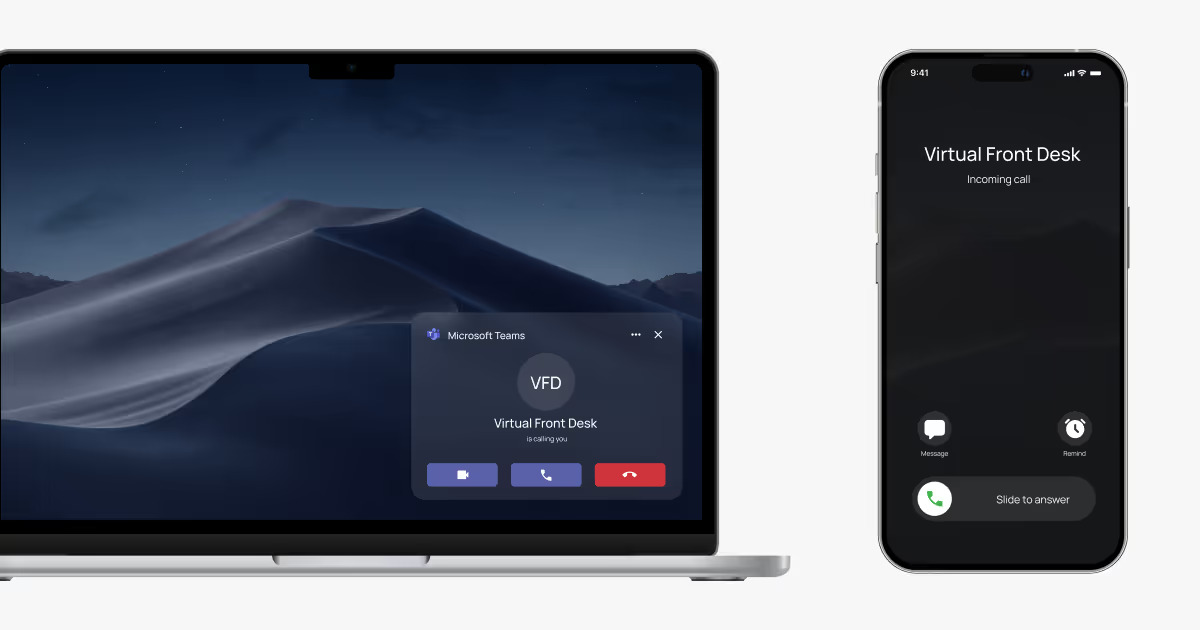
The breakthrough was staffing. With calls from every lobby routed through one call queue, a single trained receptionist now covers several clinic front desks simultaneously, greeting a patient in one city while the queue holds a walk-in from another. How many lobbies one person can handle depends on each clinic’s patient volume, but the principle scales: instead of 50 receptionists tied to 50 counters, a small remote team runs the entire network’s reception.
Just as important: the network can now hire from anywhere. Because a virtual receptionist works from home, the talent pool is no longer limited to whoever lives within commuting distance of each clinic: it is the entire United States, and beyond. Vacancies that once sat open for months are filled in days, and coverage no longer collapses when one person calls in sick.
Deep Analytics: A Full View of Every Front Desk
A natural question with remote reception: if no one is on site, how do you know what is happening in your lobbies? That is where the platform’s deep analytics come in. The dashboard gives management a full view of every interaction across all 50 clinics: how many calls each lobby receives, how quickly each call is answered, which receptionist answered it, which button the visitor pressed, and more. The network uses this data to right-size staffing by location, track response times, and see exactly how patients use each station. Every sign-in, call, and payment is also logged, giving the network audit-ready records across all locations.
The Results: A Win-Win-Win
- Lower operating costs. One remote receptionist now does the work that once required a dedicated hire at every counter, while the software itself costs $50 to $110 per clinic per month.
- Staffing shortages solved. Location-independent hiring means reception is never unstaffed, across all 50 clinics.
- Nothing lost at the counter. Insurance scanning, ID capture, document signing, and payment collection all happen exactly as they would in person.
- Patients, especially seniors, prefer it. One tap, one friendly face on screen. No apps, no QR codes, no kiosk menus.
“In addition to a self-check-in option, our patients can press a button and a real person appears. That’s why it works.”
Kelli, Practice Administrator, 50-clinic U.S. specialty care network
Frequently Asked Questions
What is a virtual receptionist for a medical clinic?
A real, remote receptionist who answers a lobby video kiosk, greets patients face-to-face on screen, and handles check-in, insurance card scanning, ID verification, form signing, document printing, and payments: everything an on-site front desk does.
How is this different from a self-check-in kiosk?
Patients never have to serve themselves. They tap one button and talk to a live person over video, which is why it is strongly preferred by elderly patients who dislike QR codes and apps. Self-check-in is also available on the same station as an option, so each clinic chooses the mix that fits its patients.
What does virtual reception software cost?
Typically $50 to $110 per location per month. Virtual Front Desk provides the software; you staff it with your own receptionists, hired from anywhere.
What analytics does a virtual reception platform provide?
A full view of every front desk: call volumes per lobby, response times, which receptionist answered each call, which button visitors pressed, and more, giving full visibility into every lobby even though no staff is on site.
Is a virtual receptionist HIPAA compliant?
Yes. Video calls run on HIPAA-compliant infrastructure built on Microsoft Azure, and every sign-in, call, and payment is logged for audit-ready records.
Is it hard to implement?
No. The platform is web-based with nothing to install; a station can be live on any device with a webcam in a day.
See it for yourself. Start a free trial of Virtual Front Desk, the all-in-one virtual reception and visitor management platform
All articles